Against the backdrop of booming intelligent manufacturing, the scale of industrial production keeps expanding, and equipment has become far more complex and sophisticated. Meanwhile, frequent equipment failures and latent safety hazards have emerged as critical bottlenecks restricting production efficiency and threatening operational safety.
Conventional equipment monitoring systems rely on manual inspections and basic sensor monitoring. When applied to complex and volatile production environments, they suffer from obvious drawbacks including slow response, low data precision and weak analytical capabilities, failing to meet the rigorous requirements of refined and intelligent management for modern industries. Accordingly, building an efficient, intelligent and reliable equipment data collection platform has become a core prerequisite for industrial enterprises to advance digital transformation and sharpen core competitiveness.
1. Boost Production Efficiency
Dig deep into equipment operation data, and leverage big data analytics and artificial intelligence algorithms to accurately identify equipment operating patterns. Optimize equipment scheduling and maintenance strategies to cut equipment failure rates effectively, lift the overall operational efficiency of production lines by over 20%, greatly improve resource utilization, and deliver a more stable and smooth production system.
2. Upgrade Safety Assurance
Construct a real-time, high-precision equipment status monitoring and early warning system. Track key equipment parameters in real time and conduct intelligent analysis to capture equipment anomalies at millisecond-level latency, release early warnings up to 72 hours in advance, and slash the incidence of safety accidents by 80%. This fully safeguards personnel and equipment, and fosters a secure and stable production environment.
3. Optimize Operation & Maintenance Costs
Enable automated, intelligent and precise operation and maintenance via an intelligent O&M management system. Cut manual inspection workload by more than 50%, streamline O&M workflows, reduce O&M costs by 30%, and substantially improve corporate operational benefits.
4. Strengthen Market Competitiveness
Accelerate the enterprise’s intelligent transformation process. Empower full production workflows through intelligent equipment management, improve product quality and delivery efficiency, build differentiated competitive advantages, help enterprises stand out amid fierce market competition, and support sustainable development.
III. Innovative Technical Architecture
The platform adopts an advanced layered technical architecture where all layers work in synergy to deliver robust support for equipment data collection and management.
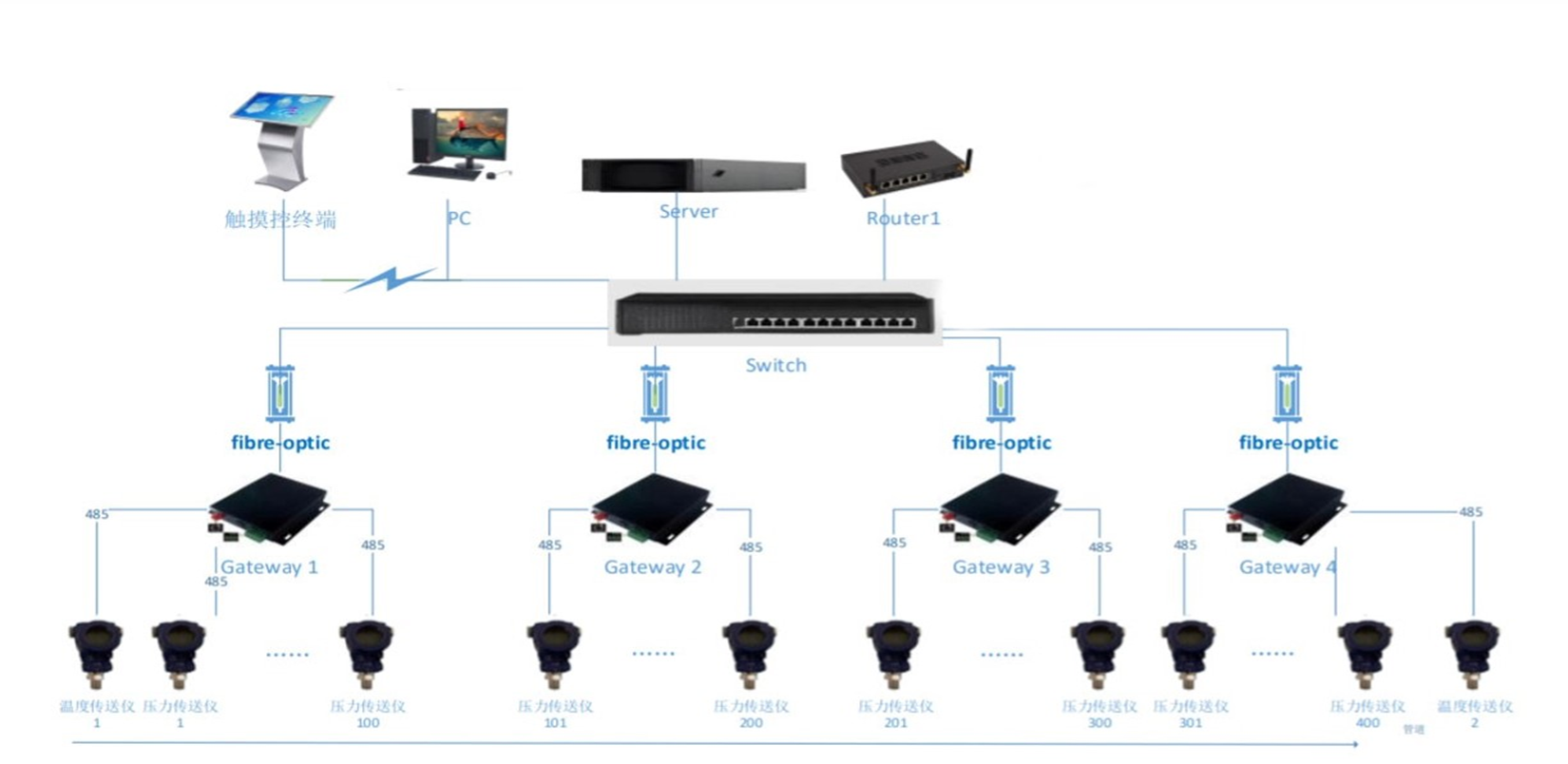
Deploy high-precision sensors and intelligent collection terminals to realize high-accuracy, real-time collection of key equipment metrics including vibration, temperature, pressure, electric current and rotational speed. Edge computing technology is deployed to conduct preliminary data processing and filtering on-site at equipment ends, reducing data transmission volume and boosting the efficiency and accuracy of data collection.
Enable high-speed, stable wireless data transmission. Network slicing technology allocates exclusive transmission channels for different types of data to guarantee real-time and reliable data delivery. Meanwhile, encryption protocols such as VPN and SSL/TLS are supported to secure data during transmission.
Build a cloud computing-based big data processing and analytics platform. Distributed storage technology is adopted to realize efficient storage and management of massive equipment data. Big data processing frameworks integrated with deep learning and machine learning algorithms perform in-depth mining and analysis of equipment data, providing powerful data support and intelligent decision-making capabilities for upper-layer applications.
Based on the data and computing capabilities offered by the platform layer, develop application modules including real-time monitoring, early warning systems, optimization analysis tools and intelligent management systems to satisfy factory production management demands.
IV. Core Functional Highlights
(1) Data Visualization & Intelligent Decision-Making
• Real-time Data Visualization
Adopt cutting-edge visualization technologies to present equipment operation data in intuitive and vivid forms, such as real-time working condition charts, trend graphs and dashboards. Users can check equipment status anytime via PC or mobile terminals to quickly grasp operational conditions.
• Intelligent Decision Support
Leverage big data analytics and AI algorithms to generate intelligent decision recommendations covering equipment fault prediction, maintenance schedule formulation and production scheduling optimization.
(2) Full Lifecycle Data Management
• Data Collection & Aggregation
Support real-time or scheduled data collection from all types of equipment and diverse data sources, including PLC, DCS, SCADA and other system data. Data cleansing, conversion and integration technologies converge multi-source heterogeneous data onto a unified data platform to form complete and accurate equipment datasets.
• Data Processing & Analysis
Adopt big data technologies to carry out real-time analysis, historical data analysis and correlation analysis on equipment data. Data mining algorithms uncover equipment operating patterns, fault modes and latent risks to provide data backing for equipment management.
• Data Storage & Security
Distributed storage technology securely stores equipment data on cloud or local data centers. Data encryption, access control, backup and recovery technologies are deployed to guarantee data security, integrity and availability.
(3) Intelligent Early Warning & Fault Diagnosis
• Intelligent Early Warning System
Users can flexibly set early warning rules and thresholds according to equipment operation conditions and management requirements. The platform monitors equipment parameters in real time and applies machine learning algorithms for anomaly detection. Once parameters exceed preset thresholds, alerts will be pushed to relevant staff via multiple channels including SMS, email and mobile APP notifications.
• Fault Diagnosis & Prediction
Deep learning algorithms analyze historical fault data and real-time operational data of equipment to build equipment fault prediction models. The models forecast the likelihood and timing of potential equipment failures, enabling proactive maintenance planning and minimizing losses caused by equipment breakdowns.
(4) User & Permission Management
• User Management
Support convenient user registration, login and information modification, and manage various user groups including internal staff, partners and third-party O&M personnel.
• Permission Management
Implement refined permission assignment based on user roles and responsibilities, covering data access permissions, function operation permissions and equipment management permissions. This ensures users can only access and operate data and functions within their authorized scope, protecting platform data security.
1. Embedded Collection
Embedded collection refers to equipment with built-in data collection modules. It directly reads internal equipment data via communication protocols by connecting to the equipment’s PLC (Programmable Logic Controller), enabling efficient and precise data acquisition.
2. External Collection
External collection involves installing additional sensors or collection devices to conduct real-time monitoring and data collection of environmental or specific metrics (e.g., temperature and humidity). This approach features high flexibility and suits monitoring scenarios for non-integrated equipment or environmental parameters.
 Public Security Filing Number:辽公网安备21060302000305号


